
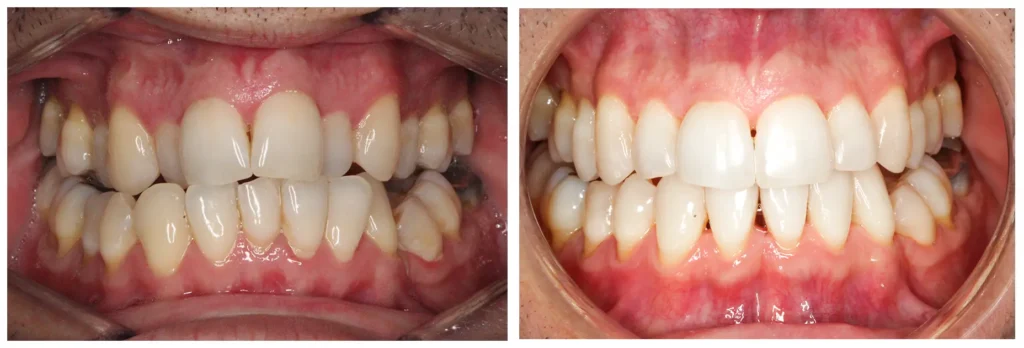
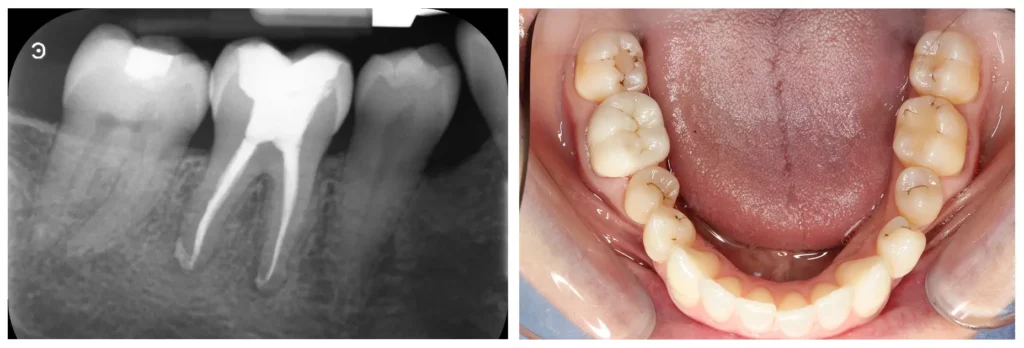
Occasionally a tooth with a deep filling loses vitality (pulp dies) and the root canal becomes infected.
The options are either root canal or extraction. When a tooth is restorable, we recommend a root canal which is a treatment whereby the infected material is removed from the root canal system of the tooth, this system is then sealed with gutta percha and in the long term we recommend a full or partial crown to ensure many more years of comfort and function.
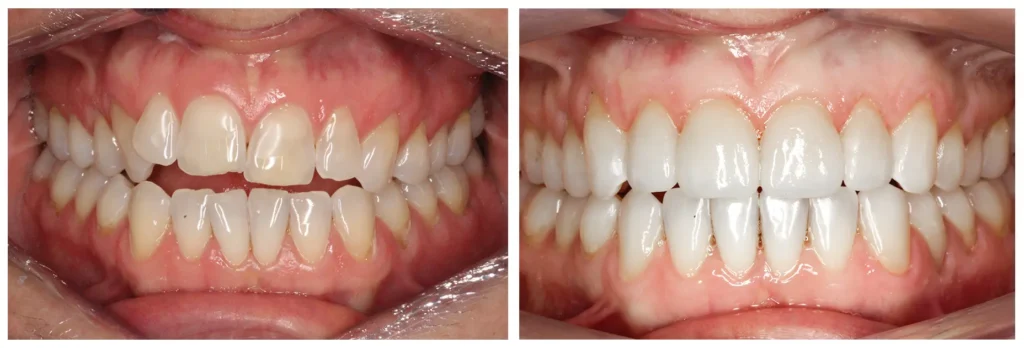
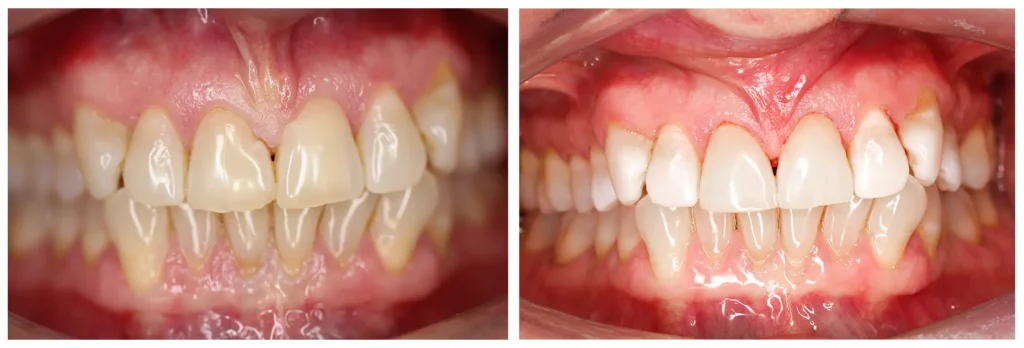
Sometimes teeth are a little mis shaped or a little worn and need some cosmetic improvement.
When the amount of improvement is minor we may want to be a little more conservative and not prepare the teeth for crowns.
In these Cases we can do some composite bonding which gives a lovely result without being too hard on the tooth.
The colour of the teeth improves over the first few days as things settle and the teeth rehydrate from the saliva following treatment
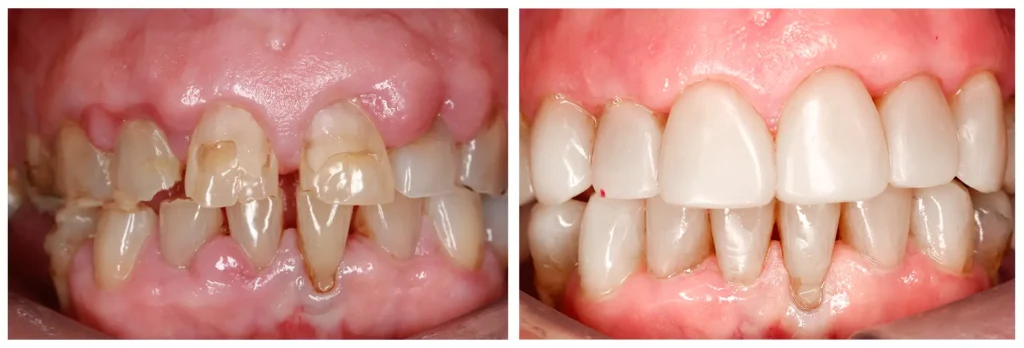
When we first met this lady, she was most unhappy with the appearance of her front teeth to the extent that she was considering removing them.
She had had them repaired several times but each time they broke. But, sometimes things are not as they seem. Her teeth were constantly breaking because she had lost some back teeth, her bite had changed and her front teeth were doing all the work.
After several visits with our wonderful hygienist Aisling this lady began to love her teeth again and started to take great care of them. We then replaced the missing back teeth with an implant prosthesis which allowed us to return her bite to her original one which in turn allowed us to repair her broken teeth with composite bonding.
We will be keeping in touch with each other as composite will wear over time and we may look at replacing the composite with ceramic crowns.
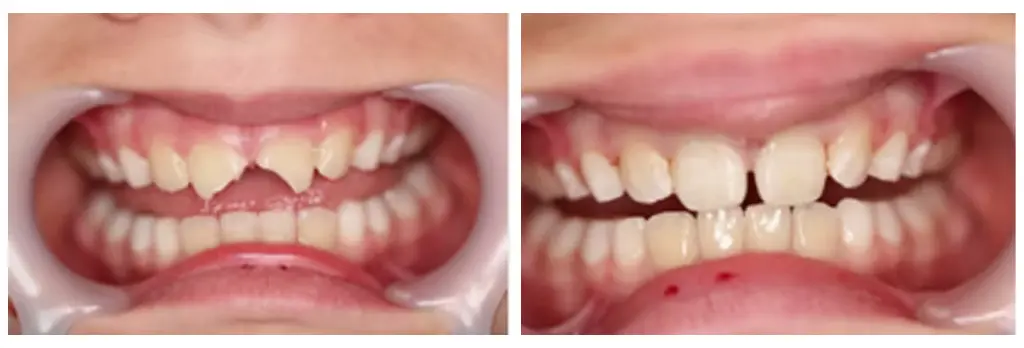
An 8 year old girl broke her two front teeth in July 2013 as a result of a fall. Her parents retrieved the broken fragments and contacted my surgery immediately for consultation. Fortunately the breaks were through the enamel and dentin only leaving the pulps intact. This removed the need for complex root canal treatment.
Local anesthetic was administered as the teeth were quite sensitive, rubber dam placed around the teeth and the fragments reattached giving the patient an excellent aesthetic result.
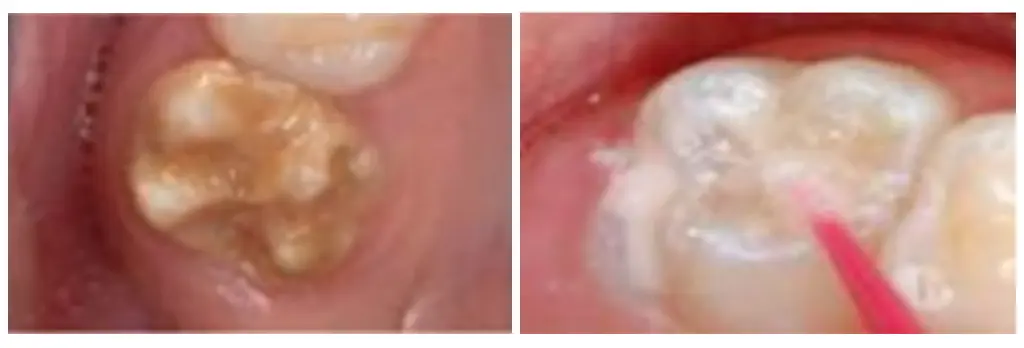
A 7 year old child presented with a decayed lower molar tooth. Mum was concerned as the patient was experiencing severe sensitivity and could not eat on the tooth. After the teeth were examined it was established that the tooth was not decayed but hypomineralised. The condition is known as Molar Incisor Hypomineralisation or (MIH). As the name suggests, this condition can affect the molars (the back teeth) and, or the incisors (the front teeth). It most commonly affects the Molars and more commonly the first permanent molar teeth, which appear in the mouth typically between 5 and 7 years of age.
Hypomineralisation means that the enamel or the tough outer layer of the tooth is hypo or under mineralised, which essentially means not properly formed and is in fact quite soft. Local anesthetic was administered because of the sensitivity, the rubber dam placed and the soft enamel was removed . The tooth restored and fissure sealed. There was in fact no tooth decay present. At review the sensitivity had resolved and the patient was eating comfortably on the tooth. This intervention has dramatically reduced the risk of tooth decay.
Contact Us
Please get in touch with us and we will be happy to advise you and schedule the most appropriate appointment for your needs.